
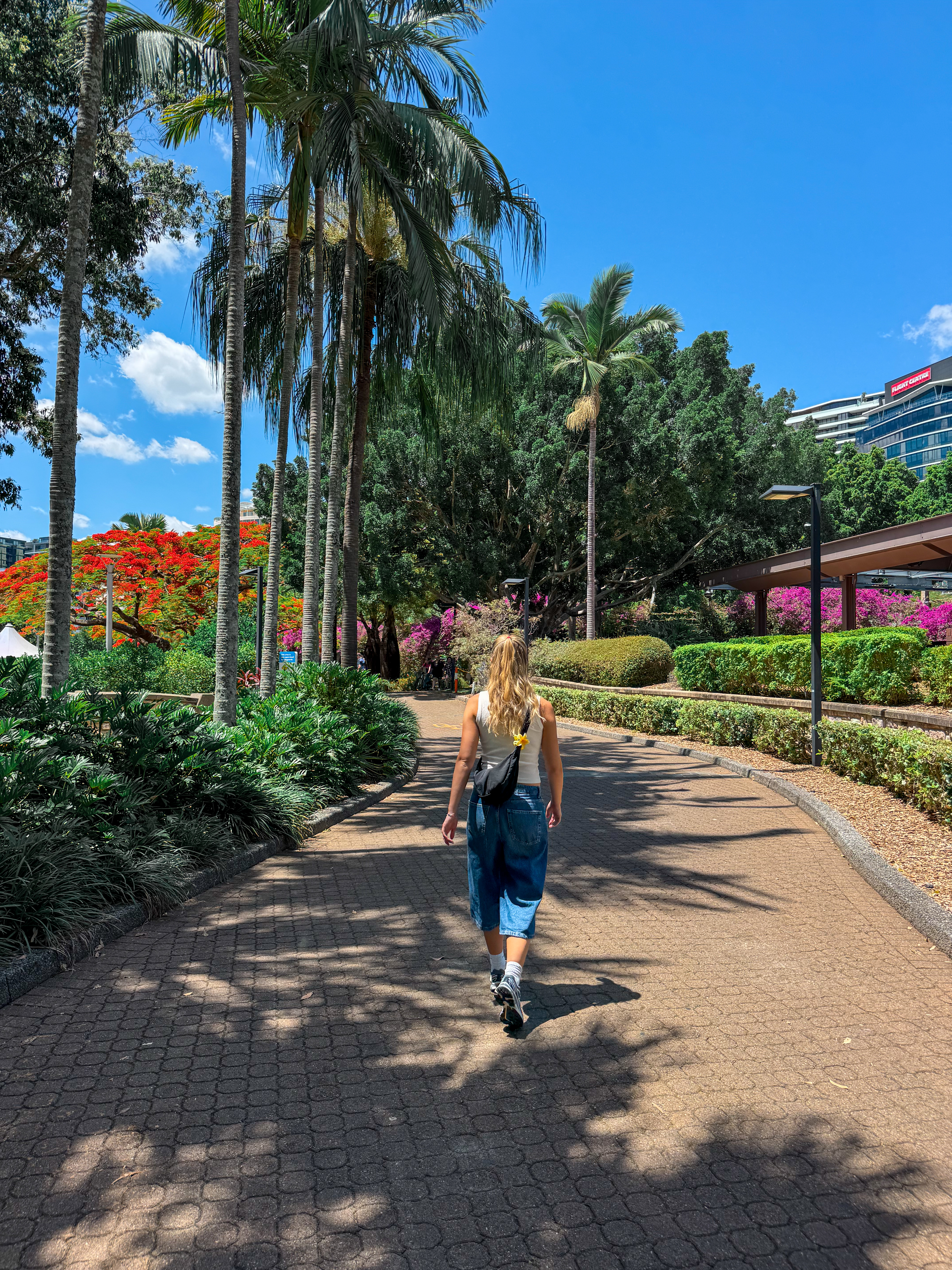
I solo backpacked Australia for nearly two months and it taught me more about independent travel than anywhere else I’ve been. It also threw things at me I wasn’t prepared for — financially, socially, logistically — in ways that Southeast Asia simply didn’t.
I’ve already written honestly about what solo backpacking Australia actually felt like emotionally and socially (you can read that here), but this post is different. This is the practical stuff — the tips that would have genuinely changed how I approached the trip if I’d known them before I left.
Book accommodation earlier than you think you need to
This is the biggest practical difference between Australia and Southeast Asia. In Asia I was used to booking the night before, and sometimes you could even book the day of, and it still be affordable. Australia doesn’t work like that.
Popular hostels — especially in places like Byron Bay, Airlie Beach and Cairns — book up weeks in advance, particularly during peak season. If you leave it too late you either can’t find anything or you end up paying significantly more for whatever’s left. Travelling solo this matters even more because you don’t have someone else to share costs with if you’re stuck in an expensive last-minute option.
My advice: book at least one to two weeks ahead for popular stops, and further in advance than that for places like Airlie Beach where you’re also booking tours. I used Hostelword and Agoda – Agoda was usually the cheapest option.
Plan your transport between cities in advance too
Transport in Australia is not like Asia either. You can’t just turn up at a bus station and buy a ticket. Greyhound routes sell out, flights between cities fluctuate wildly in price, and some legs of the journey only run a few times a week.
I’d recommend mapping out your rough route before you go and booking the key transport legs. Compare flight prices on Skyscanner and keep an eye on prices because they change constantly. For bus and coach routes use the Greyhound Australia website directly.
The one exception: Greyhound sells hop-on hop-off passes which give you flexibility on timing without having to book each leg individually. The routes themselves still sell out so you often do still have to pre book in advance with your bus pass. However, it is worth considering if you want to keep some spontaneity in your trip without risking sold-out routes and if you intend on using the bus a lot it does come out cheaper.
Get a good eSIM before you arrive
Australia is enormous. You will spend a lot of time in places with patchy signal — on long drives, in national parks, in smaller coastal towns. Having a reliable eSIM that actually works across the country is not optional, it’s essential for solo travel.
I used SimLocal for my entire two months and it was the best decision I made practically. The reason I chose it over other eSIMs was that it used both the Telstra and Optus networks — the two main carriers in Australia — which meant if one had poor signal where I was, it switched to the other. I’ve written a full review here but the short version is: don’t cheap out on your connectivity when you’re travelling alone in a country this size.
Budget more than you think you need
Australia is expensive. I knew this going in and I was still caught out.
Accommodation costs more than Asia, eating out regularly isn’t realistic on a backpacker budget, transport between cities adds up fast, and tours and activities — of which there are many — aren’t cheap. When you’re travelling solo every single cost falls entirely on you with no one to split anything with.
My honest advice: whatever budget you’ve set for Australia, add 20% to it. The financial pressure of constantly watching your money adds a mental load to solo travel that you don’t want to underestimate. Going in with a more comfortable buffer means more spontaneity and less stress.
Keep track of your spending as you go — I have a free travel budget planner you can download here which is a simple Google Sheet you can adapt for your trip.


Book your tours and experiences as early as possible
This especially applies to the Whitsundays and K’gari. These are two of the most popular experiences on the east coast and they genuinely book out — not just the specific tour company you want, but the dates you want.
I did the K’gari 3 day 2 night tour with Drop Bear Adventures and the Whitsundays scenic flight and both were incredible but both needed to be booked ahead. If you’re set on specific dates, don’t leave it until you arrive and hope for the best. You can browse and book tours and experiences across Australia on GetYourGuide.
Travel against the usual direction if the weather suits it
Most backpackers travel north to south on the east coast — Melbourne up to Cairns, typically. I did it backwards, starting in Melbourne and flying to Cairns before working south, and for October to November travel it made complete sense weather-wise. The far north of Australia gets very hot and wet in the build-up season so coming through Cairns and Cape Tribulation earlier in the season meant better conditions.
The trade-off is social. Travelling against the flow means you’re often arriving somewhere just as the people you met at the last stop are leaving, and you’re moving in the opposite direction to most people you’d naturally travel with. It’s worth knowing about before you decide your direction — for me the weather was worth it, but if connection is your priority the conventional south to north route will make that easier.
You can read my full east coast itinerary here which covers every stop with timings and tips.
Pick your hostels carefully — atmosphere varies wildly
Not all Australian hostels are created equal, and unlike Southeast Asia where most hostels have a naturally social atmosphere, in Australia the vibe varies enormously from place to place.
Some hostels are genuinely brilliant for solo travellers — social, welcoming, with organised events and communal spaces that make meeting people easy. Others feel more like long-term accommodation where people are working, settled into routines, and not particularly interested in meeting new arrivals.
As a solo traveller this matters. I’d recommend reading reviews specifically for social atmosphere rather than just rating — look for comments from people who stayed solo and mention whether it was easy to meet others. I’ve written honest reviews of the hostels I stayed in across the east coast here which should help you narrow down which ones are actually worth booking.
Get travel insurance that covers adventure activities
Australia has no shortage of things to do that could go wrong — diving, surfing, animal bites. If you’re travelling solo you especially don’t want to be navigating a medical situation or a lost bag without proper cover.
I always use True Traveller for my backpacking trips and it’s what I’d recommend for Australia. It’s designed specifically for backpackers and covers a wide range of activities without charging a fortune. Sort this before you travel, not after — and check the specific activities you’re planning are covered.
One thing Australia teaches you — especially if you’ve come from the fast-moving, constant-stimulation experience of Southeast Asia — is to slow down.
Days will sometimes be quiet. Some evenings you won’t have plans. Long bus journeys give you a lot of time with your own thoughts. Lean into it rather than fighting it. It’s true when they say solo travel changes you.
Enjoy your travels!
Em x

Mixed Dorms vs Female Dorms in Australia: Which Should Solo Female Travellers Choose?
When I first arrived in Australia, I didn’t think twice about booking mixed dorms. I’d stayed in hostels before, they were usually the cheapest option, and when you’re backpacking on a budget every dollar counts. Female-only dorms were often a little more expensive,…


Sailing the Whitsundays: What Happened When Our Boat Broke Down (And Why It Led to the Best Experience of My Trip)
On the second night of my Whitsundays sailing tour, my friend (who I’d met in Cairns week 2 into my 2 month trip) and I were lying in hammocks on the deck of a boat somewhere in the middle of the Coral Sea,…

The Best eSIM for Australia (After 2 Months of Testing): SimLocal Review
If you’re travelling Australia and trying to work out which eSIM actually works, I’ll save you some time: coverage matters more here than anywhere else I’ve travelled. I spent two months travelling around Australia and used SimLocal the entire time. I chose it for one specific reason —…
Subscribe to join the Travels community & be notified of future posts!
Leave a Reply